
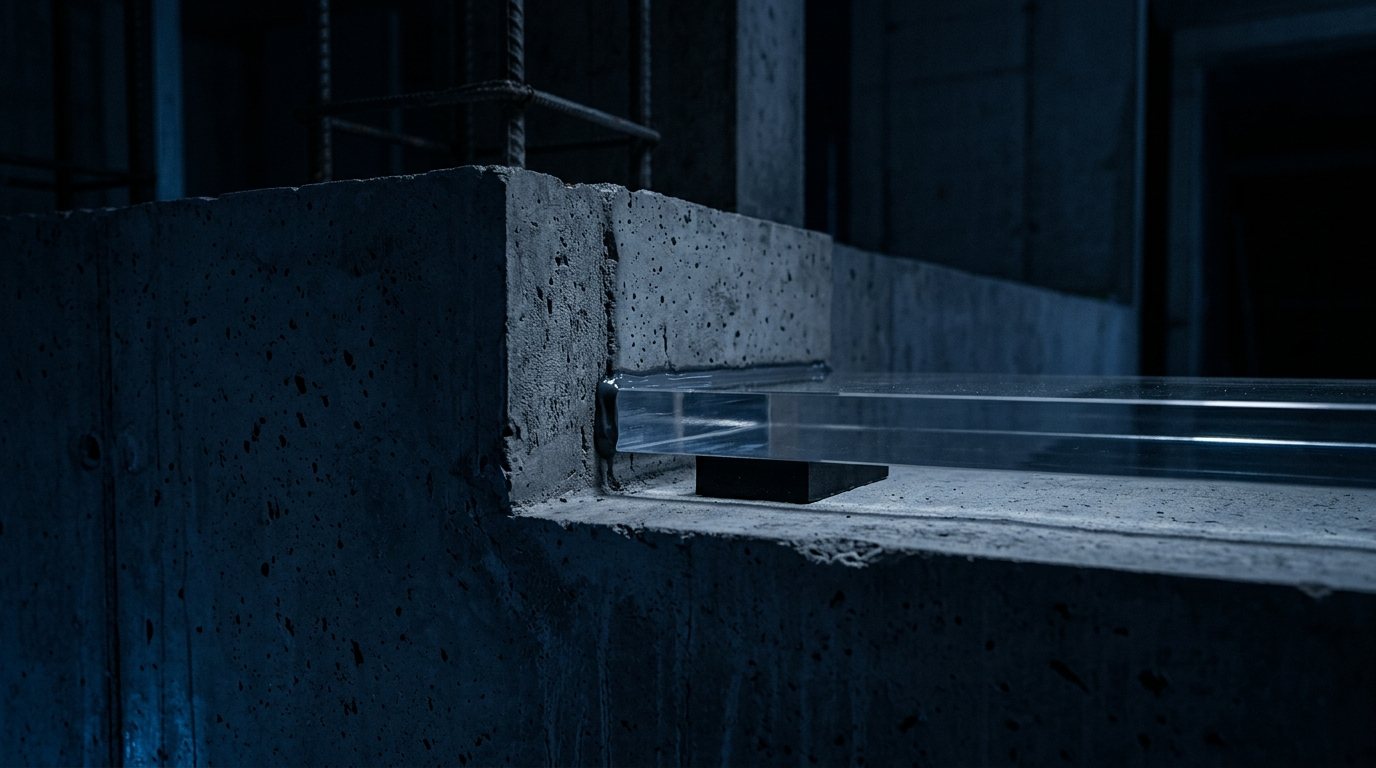
Why Acrylic Pools Fail at Interfaces, Not in Panels
When an acrylic pool wall leaks or cracks, the panel itself is seldom the root cause. Cast acrylic is a well-understood material with decades of performance data behind it. The failures that reach site almost always live at the boundaries: the rebate that was cast out of tolerance, the sealant specified without movement capacity, the support condition that changed between design and construction.
Interfaces fail because they sit between responsibilities. The structural engineer assumes the acrylic specialist will define the rebate. The specialist assumes the main contractor will cast it accurately. The contractor assumes the tolerance on the drawing is achievable with standard formwork. Each assumption is reasonable in isolation; together they produce a joint that cannot perform.
The remedy is not more engineering — it is owned engineering. Every interface on a water-retaining acrylic structure needs a named owner, a coordinated detail, a tolerance regime, and an inspection hold point. When these four things exist, acrylic structures are remarkably reliable. When any one of them is missing, the project is relying on luck.
This is where independent coordination earns its fee: not in producing more drawings, but in making sure the drawings that exist actually agree with each other — and that someone is accountable for the space between them.
Let's Bring Clarity to Your Next Project.
Speak with Bodhi Brandes about project management, specialist coordination, acrylic structures, or complex construction challenges.