
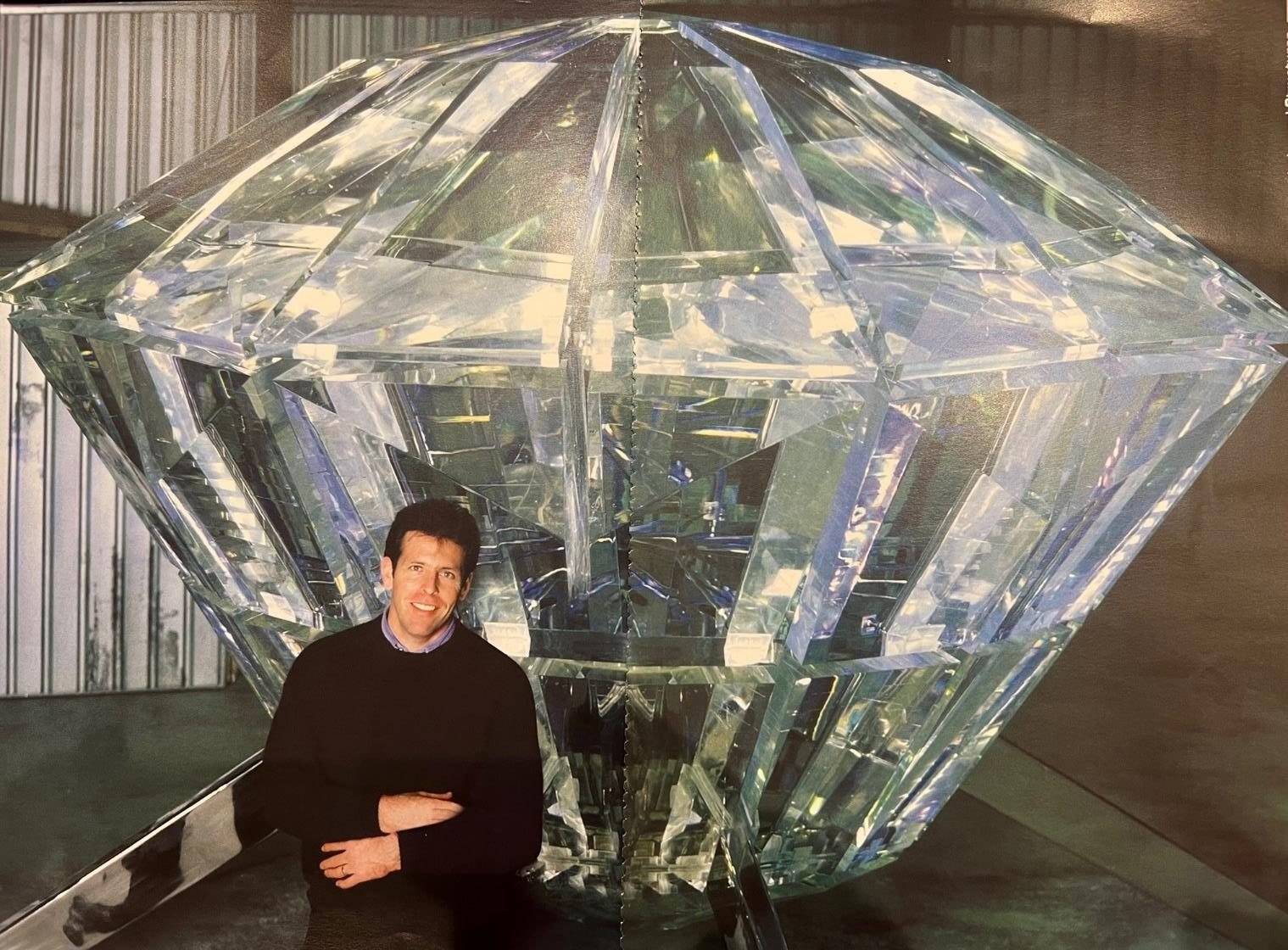
The PlexiglasDiamond of Brunei.
Eight point six tons of solid acrylic, three point six metres across — the piece that proved a "plastic" could carry the weight of monumental art.
A Material Nobody Took Seriously.
In 1993, in Brunei, a commission was placed that most workshops in the world would have declined: a diamond, rendered at monumental scale, in solid acrylic.
Acrylic had spent decades being dismissed as a substitute — for glass, for crystal, for "real" materials. But Bodhi Brandes had spent those same decades learning what the material actually was: optically purer than glass at thickness, lighter than crystal at scale, and capable of being cast, machined, and polished into forms no mineral could survive. The commission was not a gamble. It was the argument he had been preparing to make since 1983.
Scale Changes Everything.
At 8.6 tons, nothing about the piece was ordinary. Material behaves differently at mass: heat builds differently during working, internal stress accumulates differently, and every handling decision carries consequences that cannot be undone. A flaw in a small object costs a day. A flaw in an 8.6-ton object costs the object.
Working solid acrylic at this scale is closer to stone masonry than to fabrication — except the stone is transparent, and every internal imperfection is visible forever. The material forgives nothing, and hides nothing. That is precisely what makes the finished piece extraordinary: what you see is not a surface. It is the whole truth of the object, all the way through.
Cast. Machined. Polished by Hand.
A solid acrylic work at this scale begins as a casting — liquid polymer given form, then cured with patience that cannot be rushed. From there it is machined: faceted the way a lapidary cuts stone, each plane of the diamond established with tooling built for the purpose.
Then comes the longest chapter: polishing. Stage after stage, from abrasive to optical finish, until the surface disappears and only the light remains. It is the same discipline Bodhi Brandes applies today to acrylic pool walls and aquarium panels — learned here, on objects where there was nowhere to hide a mistake.
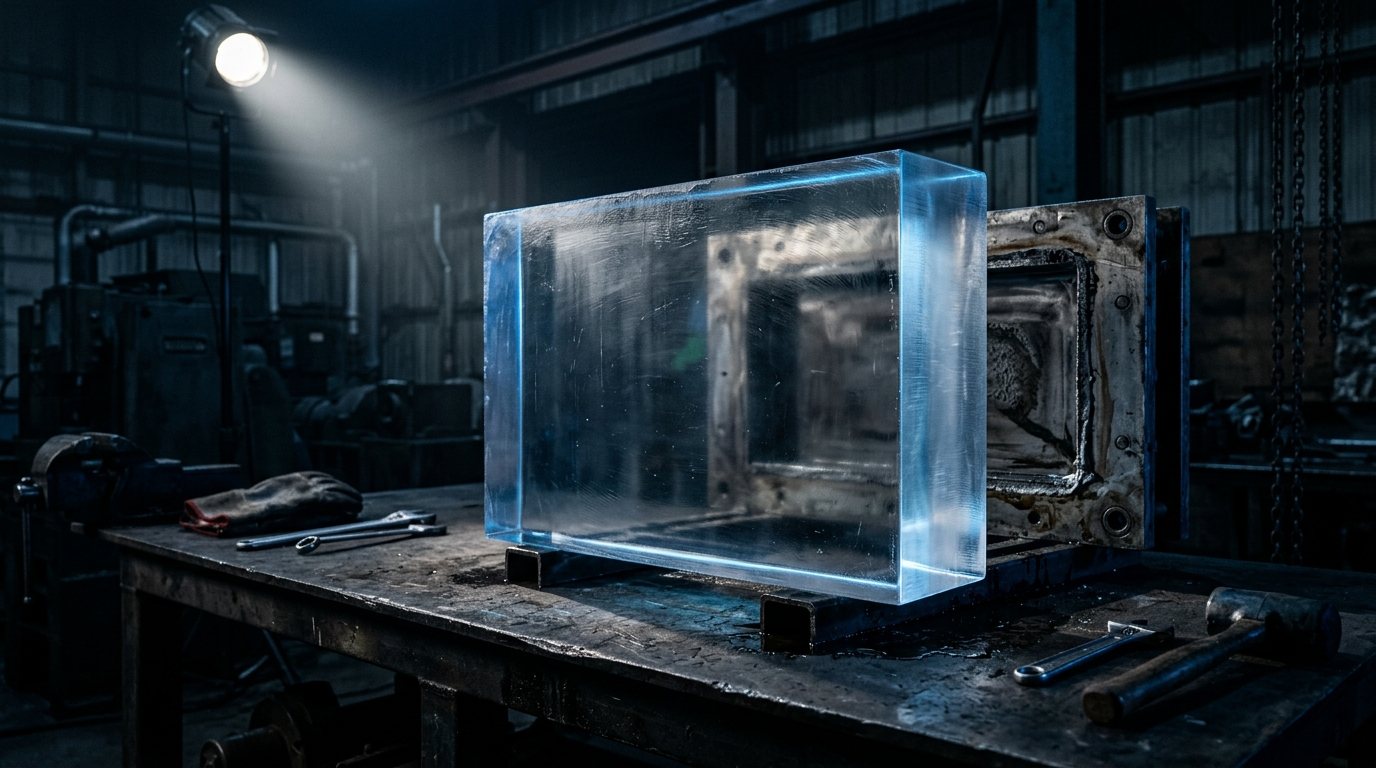
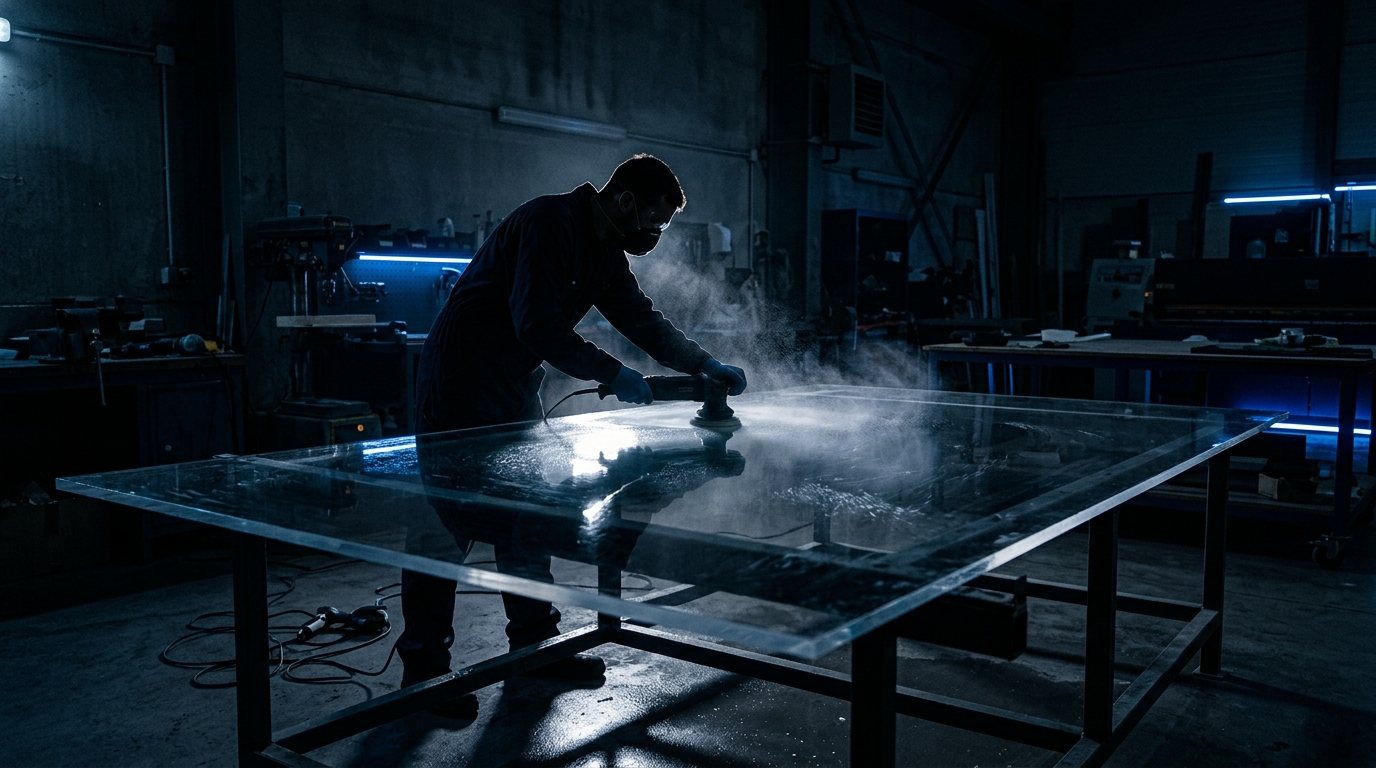
Illustrative renderings of the casting and polishing stages. Photography of the original 1993 workshop process is held in the founder's archive.
"Acrylic was never a substitute for glass. At this scale, it becomes something glass can never be."
Where It Led.
The Diamond of Brunei was not an endpoint. It was proof of method — and the method carried forward: the Royal Polo Club canopy in 1994, the Jerudong Park vaults in 1995, heavy-gauge pool walls, the Dubai Healthcare City landmark, and the acrylic domes of Expo 2020. Four decades of work, each project built on the conviction this piece established.
Today that same material knowledge sits behind Bodhi Brandes Project Management Services — no longer fabricating the objects, but directing the projects where objects like this live: acrylic pools, aquarium panels, and transparent structures where the margin for error is the same as it was in 1993. Zero.
Founder's portfolio — delivered under Bodhi Brandes' leadership at Exclusive Acrylic
Let's Bring Clarity to Your Next Project.
Speak with Bodhi Brandes about project management, specialist coordination, acrylic structures, or complex construction challenges.